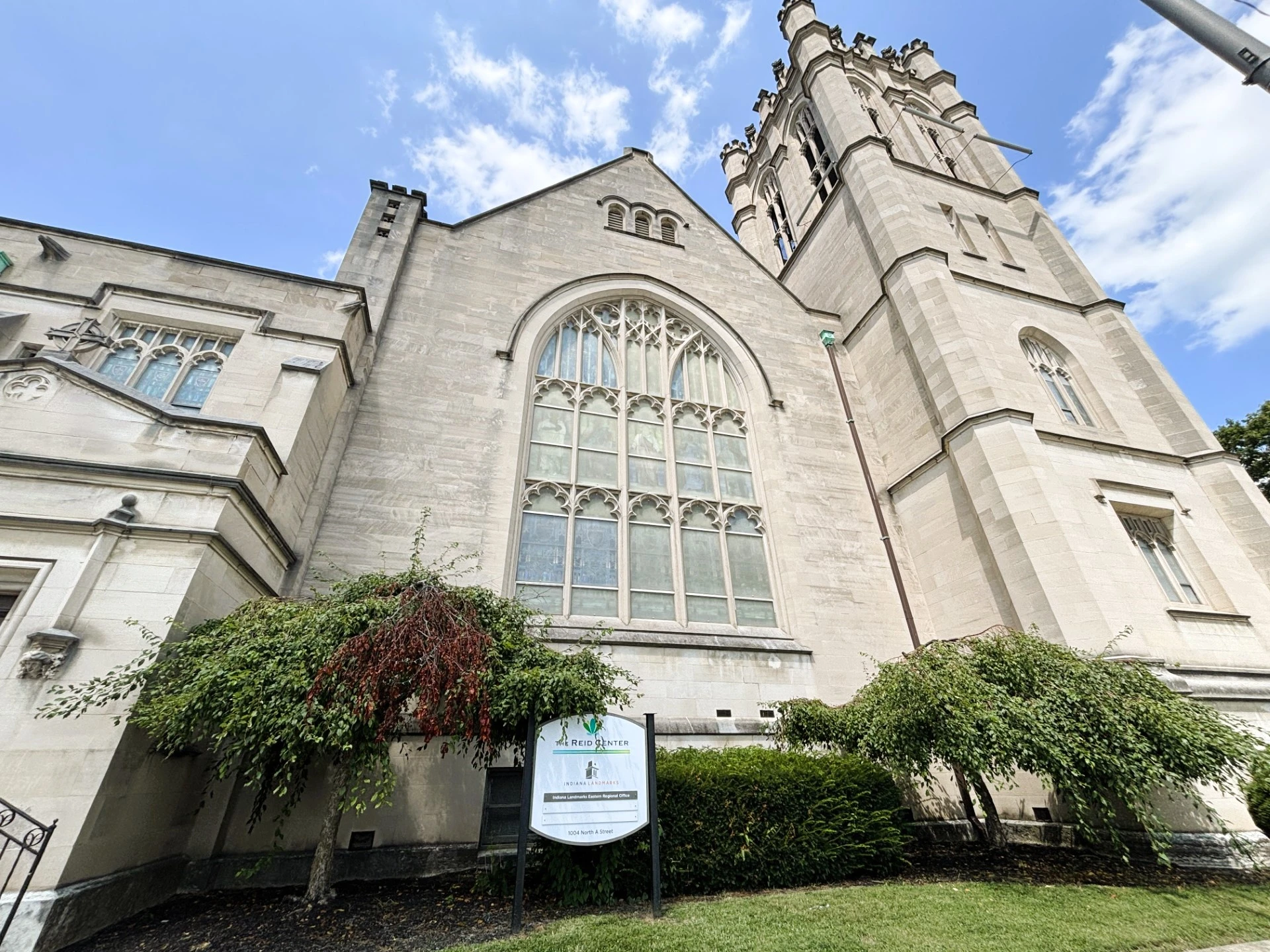
RICHMOND, Ind. – Inside a century-old Richmond building are Tiffany windows, handcrafted details and the story of one of the city’s influential benefactors, Daniel Gray Reid.
For Sue King, archivist with Morrison-Reeves Library, The Reid Center represents a connection to Richmond’s past and the ambition of a man who rose from humble beginnings to become a wealthy steel executive and philanthropist.
“People drive down North A Street and barely even look at it. But stop in some time, because you will be amazed,” King said.
Reid was born in 1858 into a large blended family. Both of his parents were widowed before they married, and he had one sister and about 15 half siblings. His father died when Reid was 15 years old.
“Being an ambitious young man, he went to work, got himself a job at the Second National Bank here in Richmond,” King said.
Reid started as a messenger boy earning $12 per month, but he quickly gained recognition for his work ethic and ambition. He eventually became one of the vice presidents of the bank while also investing in local real estate and businesses.
His financial success changed after Congress passed the McKinley Tariff in 1890, which encouraged the development of a domestic tin plate industry. Reid and several associates helped establish a tin plate company in Elwood, Indiana, during the growth of the industry.
In 1898, Reid and other manufacturers formed the American Tin Plate Company, with Reid serving as president. The company was later incorporated into U.S. Steel in 1901, making Reid extremely wealthy.
After his rise in the steel industry, Reid moved to New York City and lived the lifestyle of a wealthy industrialist, owning a Fifth Avenue home, a yacht and a mansion in Irvington, New York. Despite his wealth and life away from Indiana, he continued to support Richmond.
“The thing was, with all of the trappings of his new lifestyle, he always considered Richmond to be his home,” King said. “And he spent a ton of money here on large and small projects.”
One of Reid’s largest gifts was the construction of a new church building for the United Presbyterian congregation where he grew up. He also funded Reid Memorial Hospital after community leaders explained the need for a larger medical facility.
The church was entirely funded by Reid, who paid for the land, construction and furnishings.
“This was 100% his gift,” King said. “He paid for everything from the two lots that it sits on right down to the china that was in the kitchen.”
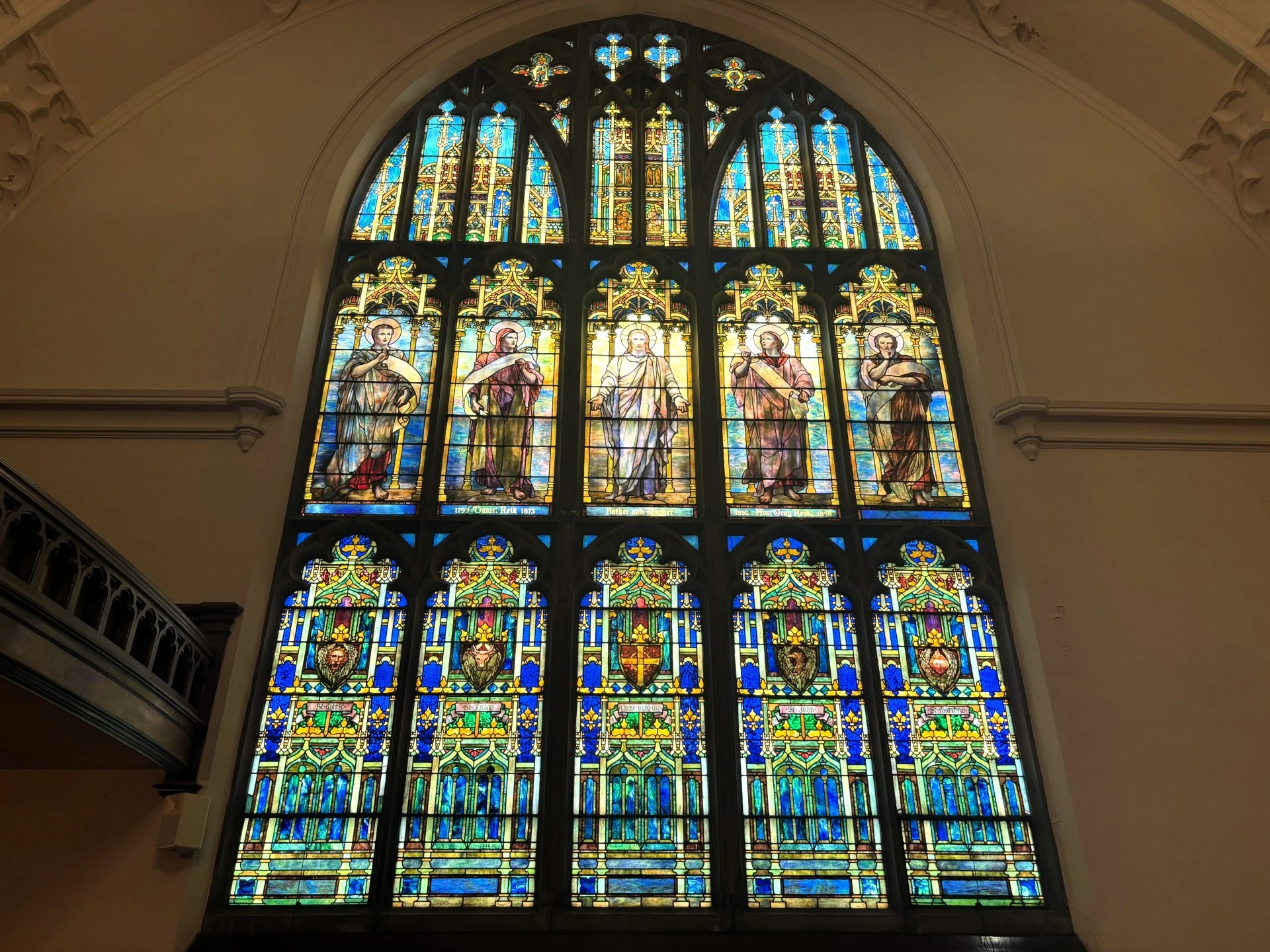
The building’s most notable features are its Tiffany Studios windows and interior designs. Tiffany created every window above the basement level, including large sanctuary windows and smaller windows throughout the building.
The windows feature Tiffany’s Favrile glass technique, which King described as a technique that used the texture and color of the glass itself to create detailed effects.
“The detail on the faces and the hands is painted on,” King said. “But the detail in the robes and the curtains is actually in the glass.”
Tiffany Studios also designed much of the building’s interior, including woodwork, mosaics, and decorative details.
Although the building underwent redecoration in the 1940s, King said much of its original appearance remains.
The building's history continues through its musical programming. King said Reid's second wife died during construction, leading him to upgrade the planned church organ and purchase a Hook and Hastings organ from Boston. The organ's woodwork remains original to 1906, and it continues to be played regularly.
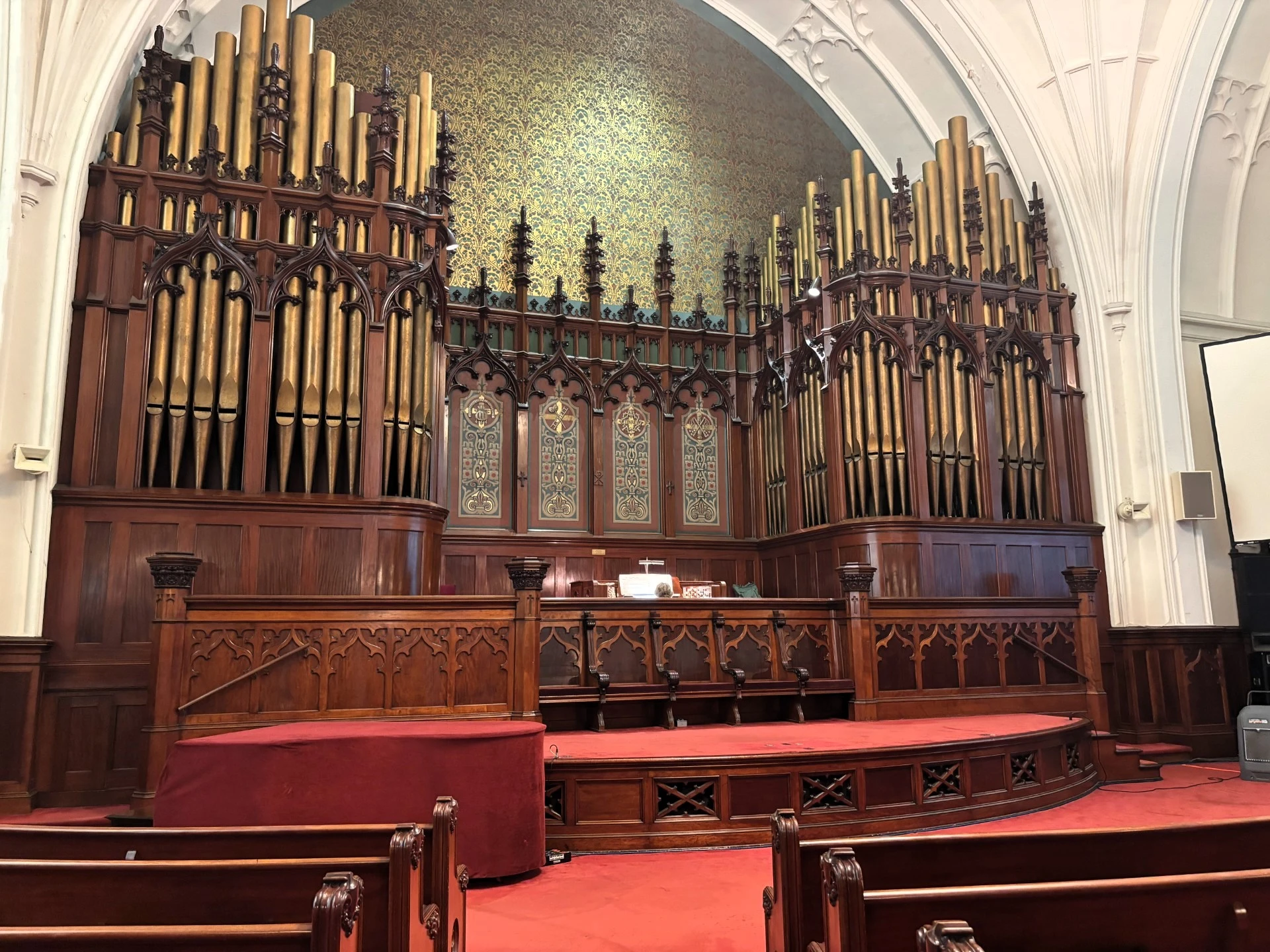
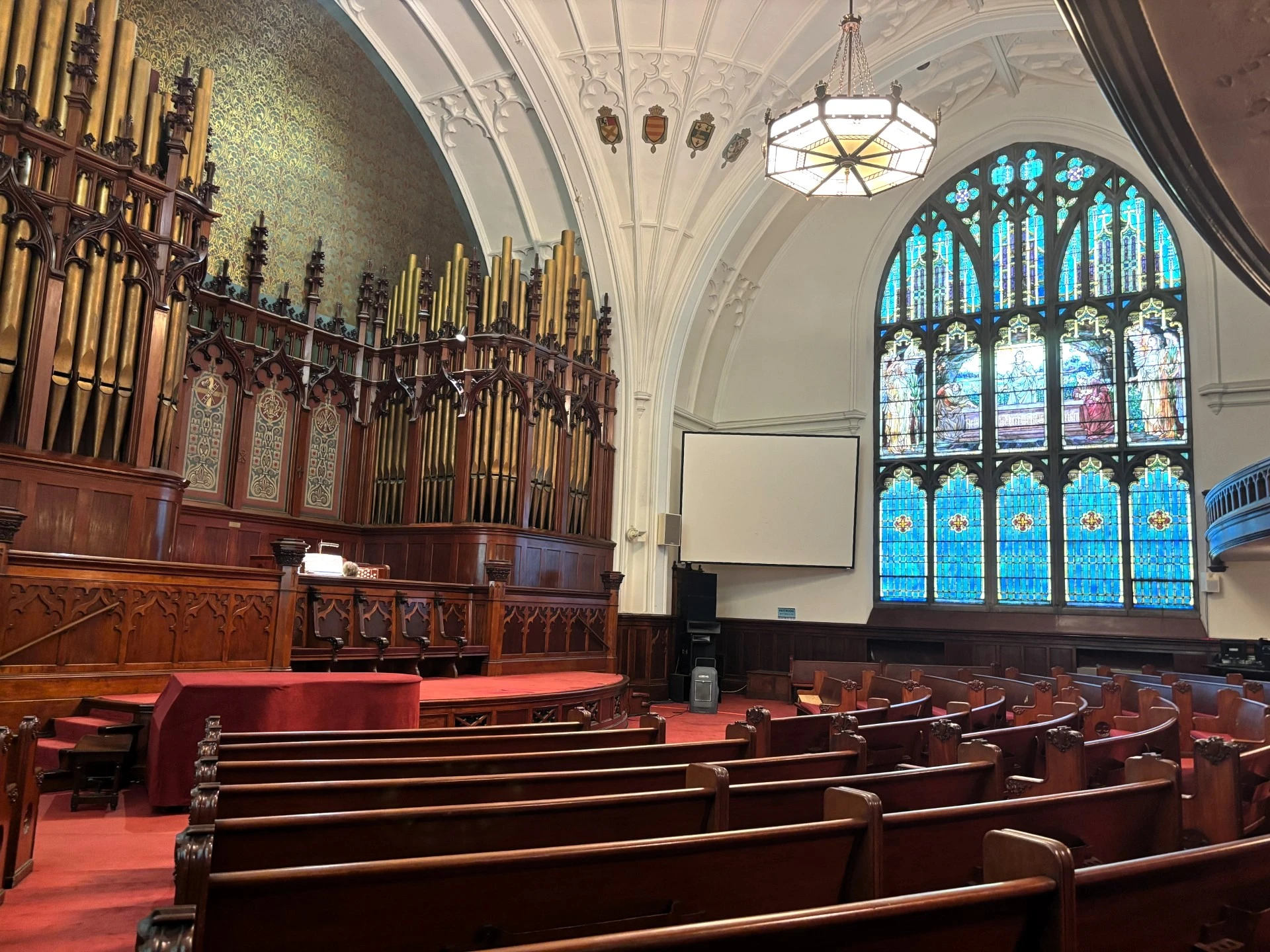
“We always say that if Daniel Reid walked in today, he would recognize it,” King said.
The building, considered to be a national treasure, is being evaluated for possible National Historic Landmark status. King said the process is still in its early stages. The building is currently within the Starr Historic District, though it was not specifically highlighted in the original historic district application.
Preserving the building comes with challenges. Because it was originally used as a church, many modern safety requirements were not needed when the building was still operating in that way. Now, as a performance venue, the organization is working to address fire and life safety improvements, accessibility needs and other upgrades.
The building served as a church until 2017. It now hosts concerts, weddings, tours and community events.
King said the goal is to continue introducing people to the building’s history.
“We’re going to keep taking care of the building and getting as many people in here as we can,” King said.
The building stands as a significant piece of Richmond’s history, preserving Reid’s legacy and the craftmanship of Tiffany Studios.
“It’s an amazing structure and it’s right here in little old Richmond, Indiana,” King said.